Thursday, March 23, 2017

Accomplishments


Some days the accomplishments are small. Laundry, the dishwasher, vacuuming and ineffectually wiping pollen and dust from the furniture, writing a few pages that might or might not survive second and third readings.

There is always something to do—that’s the nature of living by one’s self in a house and, I suppose, part of being self-employed. Bills are paid and small household repairs made with varying degrees of success. One day recently I spent a good three hours trying to find a part to fix the oven door of my 30-year-old Hotpoint electric stove. I searched the Internet and spoke with people at Sears, where Hotpoint ranges are still sold, and was told by a salesperson with twenty years of Sears experience that the parts simply didn’t exist. “Definitely obsolete,” the salesman said.

I searched some more. Eventually I found the parts in a warehouse in South Carolina where ancient appliances are disassembled and sold piecemeal. That made me inordinately proud. I’m a loud critic of planned obsolescence and knowing I had foiled the system in an oh-so-minute way made me happy. That was the day’s major accomplishment.

Book and short story queries are sent out, most of which will never earn a response. There are phone calls, and doctors, and tests for this and that because yesterday’s test was lost or false positive, or misinterpreted, or revealed something that warrants more thorough and scarier tests.

And there are the rituals, the minute necessities that make daily life tolerable—the coffee brewed just so, the half-bagel with a single pat of butter, the afternoon tea, the rereading of something written days or weeks ago.

Today I’m working on a new book, and I don’t yet know if it has a future. Since it’s largely autobiographical and relates to my first marriage, there are going to be difficult moments involved. I’m not sure how deeply I want to dig into events promulgated by a younger, far more foolish me. I’m hoping the book will explain the folly of youthful endeavors but, being not so youthful any more, I’m uncertain whether I can do the past justice.  

It does seem as if the bygone was fuller than the present is now, but that may be a series of false memories. It also feels as if the past was more interesting, and the accomplishments of then greater and more important than those of today.

I can’t remember the smaller undertakings, and perhaps that’s for the best.


Friday, March 10, 2017

Twenty-six Years

A lot can happen in 26 years, and a lot has.
On March 10, 1991, I gave up alcohol and the other drugs I used daily to quiet my ever-present unease. I quit because the small benefits of altering my consciousness were completely overshadowed by the panic attacks, black outs, ill health, embarrassment, and general stupidity engendered by drugs. Since that date, I have taken one Vicodin to allay discomfort following surgery. On two occasions, I’ve had accidental mouthfuls of drink. Once was during a social evening when I left my glass of ginger ale on a side table and later accidentally picked up an abandoned scotch and soda. The second was at a New Year’s party a half-dozen Januaries ago. At midnight, the hostess handed out flutes of champagne but assured me mine was sparkling apple juice. It wasn’t. The alcohol hit my tongue and I sprayed her dining room-and a couple of astounded guests-with a powerful mist of champagne. There were heartfelt apologies proffered all around. I was never invited to her house again.
I don’t regret the decision to become abstinent, although I am absolutely positive my creativity has suffered from it. There is a reason so many writers, musicians, painters and performing artists of every stripe use drugs. Psychoactive substances do free one from inhibitions and the constraints of accepted social norms. This is why peyote, marijuana, hashish, mescaline, opium and alcohol are found in so many religious ceremonies. Under the influence, the gods allow themselves to be seen. Is this freedom good? Yeah, sometimes it is. It lets us entertain thoughts we might repress or simply not have, and if we are smart and able and patient, we can translate these thoughts into something viable, something pleasing and perhaps even original.
On the other hand, we can become so spectacularly boring and cretinous that our friends and family flee. We are dullards who develop horrible conditions like cirrhosis of the liver or esophageal varices where we bleed to death from the throat. We swell up with ascites. We get hepatitis and strokes and cancer and bleeding ulcers. We kill off brain cells and drive drunk and walk in front of buses. We accidentally or on purpose maim and murder people and commit acts for which we cannot atone. We die.
The problem with drug usage is that it becomes cumulative. When I first started drinking, a couple of shots of Jack Daniels would do me fine for an entire evening. When I stopped, there wasn’t enough alcohol in the world to make me feel good. I had devolved from Jack Daniels Black to Popov vodka, which is made in New Jersey and does not involve potatoes or other natural products. Popov feels and tastes like boiling tar going down one’s throat, but it’s cheap. My pill intake grew as well. I seldom did street drugs, but my taste and need for pharmaceuticals grew and grew. I shook. I could not drive or sign my name. I had cold sweats and nightmares. At one point, four doctors were prescribing me Xanax, Valium, beta blockers and opiates.
Often, I couldn’t sleep and had to ingest enough to knock myself out. This is not a good habit when one is in a relationship because your spouse or partner will quickly discover the real bond is between you and your drugs of choice, and that this union is more profound than any that can be forged with another human.
Only twice—once recently and another time a decade or so ago—has the desire to use reappeared full force. In both instances I thought it through. I came to the conclusion that, tempting as a one-time fling might be, the likely return to addiction was simply not worth the very temporary peace of mind alcohol and drugs might offer.
I’m pretty sure I made the right decision.

Monday, February 13, 2017

Sleep


For the past couple of years, I have not been able to sleep well. It’s not insomnia per se, but rather a merry-go-round of worries that begins to turn as soon as I close my eyes. I’m not sure what has occasioned this. Aging, perhaps, and the realization that the things I want most have not happened yet, and may never happen. Health issues, people issues, money issues, book issues, where-shall-I-live and what-am-I-doing-with-the-rest-of-my-life issues; all weighty stuff. Part of the problem is that, like most writers, I have a fairly fertile imagination. I think in images, with Technicolor, Cinerama and SurroundSound. I have a knack for details, so the disturbing footage parading through my head when I’m trying to sleep can be unnervingly graphic and keeps me up.

Back in the penultimate decade of the last millennium, when Jack Daniels Black was my best friend and I was working downtown, I had constant panic attacks and did not sleep—I sedated myself for several hours and woke with thunderous headaches and tears in my eyes.

In time straightened out and over many years got my act more or less together. It took a while to learn how to sleep without going numb first. I tried meditation and Melatonin. I refused prescription or over-the-counter meds, since both scared me. I stayed up very late, went for long nighttime walks, and gave up caffeine. It took a while but Morpheus graced me and for a few years I slept peacefully.

I no longer do; I’m not sure how to handle it. Now, I often work until the early hours, or once again take long walks in the middle of the night. I play Words With Friends. I rearrange my pantry, sweep my house, do laundry, and sometimes cook.

Last night there was a blackout. I was watching Amelie for the twenty-second time when the lights blinked once, twice, and then went out. The wind howled, and as I learned this morning, took down many branches and trees, leaving a swath of Northern Virginia without power. I tried to fall asleep but couldn’t. I actually felt the temperature in my house drop, hour by hour. I got up and wrote, illuminating the page with a flashlight. I listened to the creaking and groaning of the house. My stomach cramped, which it has been doing lately. I worried about a recurrence of cancer, then worried more, and still more. I wondered who might be up at this time, then decided not to engage anyone in lengthy messaging. Texting would leave my phone with an uncharged battery, and I might need it in an emergency.

The power returned around six this morning, by which time I had put on socks, sweatpants, and a couple of long-sleeve tee-shirts. It was 54º in my kitchen when I made coffee. I had handwritten an unreadable mess of a short story.  The wind was still howling. In France, farmers say such a squall can blow the horns off bulls.

I need to calm down and watch Amelie again.


Sunday, January 29, 2017

Immigrants


I’m an immigrant. My mother, father and I came here from France more than a half-century ago. There was no American Dream involved, just a search for something better than what was to be found in Europe.

It wasn’t easy. We were fortunate in that my father was fluent in English. My mother and I were not. America was not a particularly friendly place back then, especially if you didn’t speak the language. My mother had an arduous time adapting to American habits and mores. It was somewhat easier for me. I picked up English fairly quickly, but small things were mysterious. Why was I told, “You eat like a pig,” because I did so with two hands on the table? In France, eating with one hand on your lap is considered inexorably rude. Why did the teacher send a note to my mother complaining about the foreign food in my lunch box? Why did tiny blonde Betsy Miller say “ew” when she was assigned the desk next to me?

My parents lived here twenty-two years. They did not become rich, or famous, or celebrated in any way. When my father retired, they scurried back to Paris to live in an apartment that was one-sixth the size of their American suburban home. My mother, from her first day here, had complained of dépaysement, a word that can roughly be translated as homesickness. I felt the same way and, if I am to be rigorously honest, I still do.

When my parents returned to France, I stayed here. In time, I got a job with a United Nations agency, and had the privilege of traveling to well- and lesser-known countries. I went to Bangladesh and Nepal, Mali, Senegal and Côte d’Ivoire, Thailand and Macao. I spent time back in France visiting my parents, in the United Kingdom attending conferences, and in Switzerland, Belgium and Holland working with my counterparts in other U.N. agencies.

One scenario replayed everywhere, all the time. I would hail a taxi in Dacca or Paris or Kathmandu. The driver would ask where I came from, and I would answer that I lived in the United States. The driver would then turn around, heedless of traffic, and ask a variation of, “How can I get to America?” The same thing happened in restaurants with queries from the waiters, in hotels with bellhops and concierges, in tourist shops and French boulangeries and Amsterdam coffee shops.

These would-be immigrants’ knowledge of the country was sometimes abysmal. One told me he had a cousin in Cancun, which he thought was somewhere southwest of New York. Another asked if Americans all spoke French, since, after all, everyone in his developing nation did. A third, a driver in Bangkok, had saved up almost enough money to cross the ocean but he was concerned about the epidemic of obesity in the US. Were there Thai restaurants in America, where palatable food might be available? Another driver, in Egypt, I think, told me the local newspaper had done a major story on an American program that sponsored giveaways of Ford motorcars to any immigrant who could reach Miami. I told him I doubted such a program existed. He told me I was wrong; of course it existed. This was America; everything was possible! All of the driver’s friends were talking about it. I hadn’t heard because I wasn’t an immigrant.

When I was traveling, America was where everyone wanted to be. It was the land of dreams, of opportunities, of second and third chances. People made good here. They learned the language and obeyed the laws and raised children and grandchildren. They opened businesses; they worked in factories; they drove buses and fixed cars. They served in restaurants and planted  ornamentals in nurseries.

Today an unelected president is trying to close our borders to the very people who built the nation and, increasingly, run it. It’s madness, of course, the act of a deeply disturbed man whose knowledge of history, economics and globalism is nonexistent. It is international bullying by a well-known bully. He might do well to remember that bullies generally get their comeuppance, often from other, stronger bullies.

In the meantime we hold our breath. We will commit the small acts of daily resistance to see the country through this crisis.

The man is a dangerous dolt; I give him two years, max, before he’s impeached.


Tuesday, January 24, 2017

What Now?


What’s the next step?
This may anger some people, but I think one reason we marched was to make our public apology to the rest of the world.

We did not behave properly; we let a madman in. Half of us did not bother to vote when we desperately needed to. We did not respect the hard-fought rights established over three centuries of struggle, and we failed to repudiate this loathsome individual who now befouls the White House (Hm. I don’t think I’ve ever written a sentence like this before.)
We need a peaceful revolution.

I’m a male so I’ll use the term “we” and hope no one takes umbrage, because I think the Women’s March was at heart a gender-free event of potentially great importance. It was about everything this adopted country of mine likes to think it stands for, and everything that is threatened three days later on this bright January morning. The huge gathering was only tangentially about pussies and dicks, though there were a lot more pussy hats than there were dick hats.
The basic fact is, we—men and women and the wide range of orientations between the two—came together for a day and made our discontent known. We did so in an amazing manner, peacefully, respectfully, and without a single arrest, which is a lot better and more powerful than any right-wing political rally held recently. We outdid Trump; we were bigger and smarter than Trump, and a lot better-looking than Trump, and more truthful than Trump (ok, the last one, that’s easy. The man lies like a rug.) We didn’t inflate numbers; we didn’t have a spokesperson blatantly try to con a media corps far savvier than he will ever be. We did something monumental and unprecedented, and almost artistic. Now we need an encore, or several encores.

The two-party structure is broken. No election could better demonstrate this than the last one. The voice of the majority was stifled by an electoral system that is both out-of-date and unfair. We need to change things.

Here are some suggestions.
No more Electoral College. This does not need explanation.

A one-term presidency of seven years. As things stand, a new president gets elected and takes two years to learn the job. Then he/she spends the ensuing two years of the first term trying to get elected to a second term. That done, she/he can devote two years to real work unaffected by electoral concerns, but the last two years in office are spent trying to groom a successor from his/her party.
A one-term Congress. Recently, someone said (or I read) that the thing about politicians is, they will never, ever, find a better job than the one to which they were elected. Free office-space and staff. Free health care and travel. Junkets all over the world. Respect and a decent salary. An endless buffet at the public trough. Who’d want to abandon all those perks? Give ‘em a single eight-year term, then send ’em back to civilian life.

A national holiday on Election Day. This will free people to go and vote.
A constitutional amendment requiring every citizen of voting age to show up at the polls on Election Day. There is perhaps no more basic a duty than voting. Since not voting might be seen as a freedom of speech issue, I suggest people who don’t want to vote do exactly that, at the polls. Check the little box that says, I don’t wanna vote. Then go home. But maybe, just maybe, being at the polls might spur some apathetics to fulfill their duties as citizens and cast a vote, something they might fail to do if on Election Day they’re watching reruns of America’s Got Talent.

The March was an extraordinary moment, but revolutions are not waged in a day.


Monday, January 23, 2017

A Million Women, Maybe More


Women, thousands and tens of thousands and hundreds of thousands, and more than a million of them worldwide; women of every age, gender affiliation, color, size, shape, nationality and faith. Women on crutches and in wheelchairs, and posing as Statues of Liberty and Blindfolded Justice. A lot of men, as well, and thousands of children. It was a sight that will be pictured in future history books, and it was all good.

Like almost everyone I know, I went to The March. I got there around 7:30 a.m. and met with a group of friends. We munched bagels in the U.S. Capitol offices of Congresswoman Diana DeGette of Colorado. By 9:30, the streets of Capitol Hill were already thronged, even though the official March would not begin until one that afternoon.

There have been descriptions of almost every aspect of The March by better writers than I, but just for the record, here are a few observations.

§  According to the District police and US Park Services, NOT A SINGLE PERSON WAS ARRESTED. NOT ONE!! This is beyond amazing; it borders on the miraculous. More than a half-million people gathered in the streets of Washington, D.C., to protest the presidency of a misogynist and xenophobic dullard, and NO ONE WAS ARRESTED. I keep writing this in all caps and bold because I’ve covered many demonstrations for newspapers and magazines, and there are always arrests. Always.

§  The police, National Guard, fire departments, EMT and Park Service officers were extraordinary. They were helpful, they smiled, they pointed people in the right direction. In what has to be a one-of moment in the history of protest, demonstrators, learning that it was D.C. Police Officer Allorie Saunders’ birthday, serenaded her twenty-one times and applauded. This is so far beyond the norm of police/demonstrator behavior that once again, I have to use the word ‘miracle.’ By the way, it was widely reported that the Park Service no longer gives out official crowd counts of demonstrations. This is true. But I spoke to two Park Service officers who told me they had estimated the day’s crowd at more than 600,000. One added that she thought the attendance at Trump’s inauguration the day before was less than 100,000.

§  The oft-maligned Metro system also rose to the occasion with trains that ran seamlessly and helpful employees guiding riders through the turnstiles without a hitch.

§  Ahmed’s Kabobs food truck did landmark business. A long line of customers waited patiently to buy ten-dollar skewers of chicken on beds of white rice. Ahmed gave away a bottle of water with every order. His wife and three sons were manning the grill. Ahmed is an immigrant from Libya. He got to the States four years ago and loves it here. No one opposed his presence.

§  At one point, I was immobilized by the crush of people. This was the sort of situation that causes anxiety attacks, and an older woman next to me began to panic, yell and thrash. Three of us extricated her from the crowd. It took ten minutes of pushing forward from the center of the throng near the Air and Space museum to its edge on the other side of Independence Avenue. When we reached the sidewalk of the HEW building, word had gotten there of a medical emergency, and two EMTs took the woman and led her to an ambulance. I never spoke to the other two marchers involved in this small incident. One was a very large black man who led the way through the crowd shouting, “Coming through, excuse me, thank you, coming through!” and the other was a small woman who held the panic-stricken older woman’s hand as we threaded through the crowd.

§  I witnessed two acts I would term reprehensible. The first occurred when a large black Cadillac SUV tried to push through the crowd on a side street. A masked demonstrator ran up to the vehicle and showered it with what I think was talcum powder. The SUV’s windows were tinted, and the rumor was that Trump was in the car. I sort of doubt it. Later, as I walked back to the Smithsonian Metro Station, I spotted a small group of men, one of whom was wearing a Trump-emblazoned American flag like a cape. This was interesting and I followed them. They were not belligerent or aggressive. People ignored them until one long-haired demonstrator grabbed the flag and tried to wrest it from its wearer. A mêlée ensued with a couple of inefficient swings thrown. A woman rushed in and got between the two demonstrators. I grabbed the long-haired one and pulled him away (no bravery was involved on my part; the assailant, who was very short and weighed maybe 90 pounds, did not resist) and that was that.

§  I was struck by the scarcity of people of color among the demonstrators. Many of the ones there had Black Lives Matter signs. There were also sign-carriers promoting scientific research and a cleaner environment, organic veggies, better education, Obamacare, and the imminent Second Coming of Jesus Christ.

§  Trump’s only positive accomplishment so far, it seems, is legitimizing the word ‘pussy.’ The Washington Post wrote about pussy hats, and it was sort of disconcerting to see a ten-year-old girl with a ‘Don’t Touch My Pussy’ placard. A few signs merely said, ‘Don’t Be a Dick,’ though they didn’t specify to whom this warning was addressed.

All in all, it was a glorious day.


Wednesday, January 11, 2017

News


Recently, Arielle and I have had discussions on where and how to get reliable information. Arielle depends largely on the electronic media, which I view with great suspicion. I’m a print person; a good part of my professional life has been spent working for newspapers and magazines. I’ve written books, articles for dailies, and stories for monthlies. I have an unabashed liking for paper, ink, print, bylines and fact-checking.

The gist of my argument is this: Can one trust information that can be anonymously posted, reposted, and then widely believed, when the sources of the information are unclear or non-existent and the intent of the posts is debatable? Do people who post or repost information on electronic media platforms routinely check their sources?

Let me add here that I am not referring to e-media versions of accepted publications like the Washington Post, New Yorker, NYT, or WSJ, though all of these have their own take and slant on the news.     

A couple of days ago, I reposted on Facebook something that made sense to me, a number of statistics relating to reading in the United States. The figures cited matched what I had seen online and what I believed to be accurate, namely that fewer and fewer Americans read books. I agreed with the assessment that reading in America had fallen off in recent times. I failed to look for backup sources that would confirm my assumptions.

The posting was in the form of a rectangular graphic, at the bottom of which was a statement that would be hard to corroborate, namely that, “Reading one hour per day in your chosen field will make you an international expert in 7 years.” One hour, multiplied by 365, multiplied by seven, comes to 2,555 hours, plus one or two additional hours for leap years. Yes, I thought, anyone who spends that much time on one subject could well earn a doctorate and become an expert. This further assured me that the rest of the figures cited were accurate.

At the top of the article, I typed, “True Fact.” My friend Sarah Blumenthal quickly commented, “Actually, most of it isn’t,” she wrote, noting that “the stuff that's based in reality and not made up is based on statistics from about 15 years ago […]. Reading among adults has been on an upswing for a while.” She attached a web address that challenged almost all the numbers cited, as well as the credibility of the source that first came up with the figures. I won’t quote these here; they’re at http://skeptics.stackexchange.com/questions/9446.

I did not know the statistics I posted have been online for more than a decade. I didn’t bother to check them because they matched my beliefs. They were, effectively, fake news or, at best, outdated news passed off as recent findings.

I doubt that the established print media would have blindly printed and disseminated these figures. They would have checked and double-checked and possibly written an advisory notice to warn the readers of the figures’ lack of accuracy. In fact, I’d be willing to bet that the numbers would never have appeared in the reputable press.

What it comes down to, in my opinion, is this: There are assuredly many trustworthy EM sites that accurately report the news, but online it’s hard to know what is reliable and what is not. Years ago, Reddit was. Now it’s a disseminator of unchecked nonsense. Breitbart repeatedly put out false information about Trump rivals and was widely read and quoted. Facebook, though it has made efforts to get rid of fake news, simply can’t control the flow. A November 14 article in the New York Times advised readers that both Facebook and Google were gearing up to combat fake news sites. This is as it should be, but such efforts won’t solve the problem associated with reposting inaccurate information, as I unwittingly did.


Tuesday, January 10, 2017

Interruptions

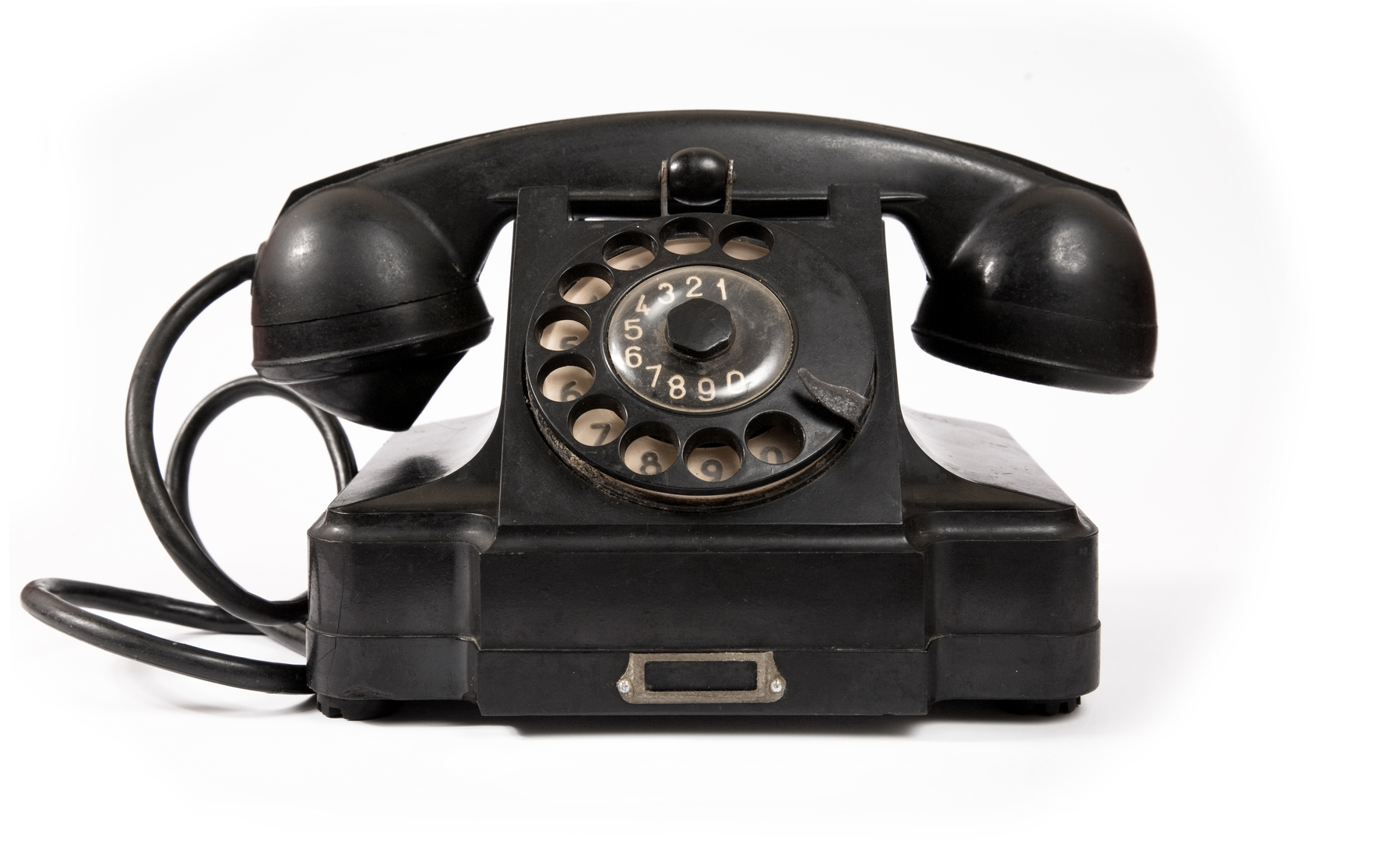
Old black phone with dust and scratchesI had lunch with a friend recently, a man I’ve known more than two decades and with whom, years ago, I shared my innermost secrets. Then we fell out of touch. I’m not sure what happened. I think I said something that disturbed him, something that, in retrospect, I had no right to say, and for too many years, we ceased speaking. I saw him from time to time, at the funeral or a mutual friend, then at a restaurant, and once in a high-end grocery store. We were unfailingly polite, but our ability to converse with each other had suffered badly.
His children grew, his business thrived. He got divorced, then remarried and moved to an affluent part of town. He traveled, bought a winter home in ski country  and spent less and less time in the area. Four years ago, he learned that I had cancer. He sent me a lovely Hallmark card and I felt somewhat insulted. My illness, I thought, deserved more than prefab sentiments.
More time passed. I ran into him at a community event. He had grown greyer and balder, and become one of those people you see on a subway platform and don’t really notice. I had gained weight, wore more wrinkles, and lost my glasses following Lasik surgery. That day, we smiled at each other and headed off in different directions.
A couple of weeks ago he drove down my street and noticed the For Sale sign planted in front of my house. He called me. I recognized his voice immediately. He didn’t say, “Hey, this is--,” but instead asked with a note of concern what was happening in my life, and I told him. I’m selling the house because I live alone and really don’t need the space; because I can live more cheaply renting an apartment than owning a home; because living by myself in a multiple bedroom house has gotten sort of empty; and because, frankly, in a short time, I shall need the money from the sale.
Soon thereafter we ate lunch at a local restaurant. His phone kept ringing, five times in ninety minutes, and I suddenly remembered that one of the reasons I had not re-engaged with him earlier was because this occurred every time we met. His phone would ring. He would answer it, and the ensuing conversation with the person at the other end of the line might last five to fifteen minutes. It was always business, or family, or money, or a situation he had to handle immediately. My friend, it appeared, was awash in emergencies that demanded his instant and total attention, and I began to feel that whenever we met, my presence was superfluous. I mentioned this to him once years ago at dinner; he shrugged, apologized with a smile, and then answered the phone again as it trilled between the appetizers and the entrée.
I’m not sure what to make of this anymore. My friend means no disrespect; I know this for a fact. He is a busy person who heads a thriving enterprise and has made it his priority to deal with issues as quickly as they crop up. I can’t fault him for this, even though this is not how I would behave, which might well explain why I don’t head a thriving enterprise and why my house is for sale.
In the end, I was glad to see him. I’d missed his friendship and his wisdom. Still, it irked me that, as we hugged and agreed to meet again soon, his phone rang. He turned away and answered it.

Thursday, December 29, 2016

Justice


The rape and murder of Tricia McCauley didn’t make the front page of the paper today, though a large article about the Court Services and Offender Supervision Agency appeared on A-1.

Tricia McCauley was killed over the holidays. She was abducted as she made her way to a party, bearing a plate of Brussel sprouts. She was young, white, and well-known throughout the District of Columbia theater scene. I suspect there may have been only two degrees of separation between her and me because I know people in community theater, and they’re a tight-knit bunch. But that’s not the point.scales

Her death was one of many in the Washington area. Most murders and rapes did not get the amount of attention that Tricia’s did because the victims were unknown and deemed unimportant. It appears she was killed by a repeated-offender, a man arrested again and again for lesser but sometimes violent crimes such as theft, assault, and shoplifting. The man was charged, found guilty and released a bunch of times. He habitually violated his probation, and the Court Services and Offender Supervision Agency, the DC Government entity charged with keeping tabs on him, did not report the probation violation to the enforcing authorities because they feared it would violate his rights.

I’m a liberal and I am beginning to understand fully and painfully Winston Churchill’s reputed quote that, “If you are not a liberal at 25, you have no heart. If you are not a conservative at 35, you have no brain.”

I have a pretty good brain, and what I am, is tired of the level of violence that now seems not only acceptable but somehow forgivable. We shrug our shoulders too often; we forget too quickly, we’re too eager to move on.

Tricia’s accused assailant, according to his own family, was in drastic need of help. He had mental issues, a well-known criminal background, and a total disregard and disrespect for the bureaucrats assigned to help him. He was sentenced by the courts to wear a radio anklet but never bothered to show up and have one fitted. In other words, the authorities released him, trusting a man whom they knew to be a recidivist of the worst order to appear as commanded and meekly accept a device to monitor his whereabouts. What could go wrong?

Plenty, obviously.

I don’t know if in this particular case the accused is guilty of the crimes. The fact is that a huge number of violent people who have been arrested, charged tried and found guilty of blood-curling wrongdoings are released on their own cognizance. The overwhelming majority of them return to being what they are, habitual criminals who prey on the innocent without fear of reprisal. We, as a society, apparently deem this to be acceptable. It is not.

I’m not a lawmaker. I don’t have solutions, but, like most of us, I can spot failure when I see it. The system has failed to protect its most vulnerable—in this case, a young woman of talent—as well as countless members of the elderly, the homeless and dispossessed,  the LGBT community, the physically and mentally challenged, and all those without the resources to fight back.

Here’s the deal. A government that cannot protect its citizens is not a government worth having. It can’t be stated more simply than that.


Tuesday, December 20, 2016

Relapse

Someone dear to me, a person important in my life, relapsed recently.
Some eight years ago, she was one of those active drinkers who almost lost it all by hitting the bottle daily, often to a blackout. Her ex prevented her from seeing her children. Her friends, after a while, severed relations because it was simply too hard to be with her, to see this sad. slurring clone of who she was, and not know whether she might be herself that day, or under the influence.  Had it not been for a drunk-driving offense that put her in jail, then in rehab, and finally in a sober home for women, she would have died. In fact, all those years when she was drinking, most of us were sure that one day, we’d get a phone call saying she’d passed away. We anticipated an accident, rape or murder, cirrhosis, freezing to death in winter while unconscious in a car, any of the causes of a demise generally related to alcoholism. She didn’t die, and to the joy and amazement of most of us, she slowly rebuilt her life. Her kids came back. She found work. She got healthier. She spent weeks with her parents. She became once again the person she was meant to be.
About a week ago, the relentless logic of alcoholism and addiction returned and won her over. Addiction—and make no mistake, alcoholism is an addiction and not a moral shortcoming, or a matter of willpower—is a strange disorder, perhaps the only disease that tells you that you don’t have a disease. It’s an unfair condition, since the solace of a drink or two is available to normal people but not to the alcoholic. It’s a disease that requires you give everything you have to give, but offers very little in return. It’s a killer. Most of us familiar with alcoholics have gone to many, many premature funerals. We have attempted—and failed—to console families that do not understand how such a difficult and meaningless death could occur.
My friend stayed straight through seven-and-a-half years of good and bad times. I saw her smile and weather difficulties and rejoice in small triumphs. I don’t know what happened to her a couple of days ago, why she very deliberately chose to go to a liquor store and buy several tiny bottles of vodka that she carried with guilt in her purse. She drank them surreptitiously and, I suspect, with very deep shame. I don’t know what pushed her over the edge—anxieties, fears, worries—and it doesn’t really matter. The frightening and amazing thing here is that in spite of knowing the potential consequences of her actions, the almost-certain loss of most things and people she holds dear, she nevertheless opted to take a drink. The better part of her mind, still ill despite years of being straight, decided she might get away with it. Perhaps she thought to have a one-night stand without consequences, but that rarely happens. Relapses don’t really work that way. My friend drank because it was easier to do that than not, or so her ill-fated reasoning went.
Now we wait. Her drinking history provides little confidence. The holidays are bad times for alcoholics, practicing or not, but the truth is that any time of the year, when liquor hits a body that was once dependent on its effects, all bets are off.
She and I spoke this morning. She’s not happy and she swears she has sworn off, but that’s little solace. She did that a hundred, a thousand times before, back when she was using.
I’m hoping that the experience and knowledge gathered from her years of sobriety will prove more powerful than her desire to drink but, honestly and sadly, I’m not holding my breath.

Saturday, December 17, 2016

Luck


Good luck, as I understand it, is when opportunity meets preparedness. Bad luck is? I’m not sure, but starting at 5:30 p.m. on Friday, I had my fair share of it.

At 5:30 p.m. on Friday, my car, a 1986 Porsche 944 Turbo that I have maintained and had a crush on for a long time, was rear-ended. I was waiting to exit a mall parking lot when a seventeen-year-young woman driving a Nissan SUV with Alabama plates slammed into my rear bumper and crumpled it, smashing a fender and shattering all brake and back-up lights. My head snapped back into the headrest and I saw stars, or at least very bright little spots of light reminiscent of van Gogh’s Starry Night.

My car looked like Paul Bunyan had hit it with a sledge hammer. Hers didn’t have a scratch.

It was about 24 degrees that night and I’d run to the store for hot peppers to make lomo saltado. I was wearing a thin sweater and a jeans jacket. I was freezing.

In time an ambulance came. The EMT folks took my vitals and asked how I felt. Mostly angry, I told them. They nodded. “Ooh, a Porsche,” said one and nodded sadly. They ran an EKG and found an irregular heartbeat. Did I know about this? No. I’ve had multiple surgeries over the last five years and no one had pointed this out. Did I want to go to the hospital? No. I wanted to go home. My car was drivable and I limped back to the house. I reported the accident to my insurance company and the agent told me he’d take care of everything.

This was an exaggeration; the next day was a comedy of errors. I woke up sore and with a headache. I called the woman’s insurance company to make sure she had reported the accident. There was confusion regarding where the accident had occurred—Falls Church, Virginia, or Falls Church, Alabama? Eventually, I was sent to a rental car place a few miles away. I got there and the door was locked with no one in sight. The phone rang unanswered. The car I had driven there died in their parking lot. A friend with a tow truck had to rescue me. A few more calls to the insurance company elicited apologies. No, they hadn’t known the Hertz office was out of business. Really? REALLY? They suggested another rent-a-car place.

I had invited friends to my house for lunch that day. When I got home, I set up the table, put out the food, and my low-level headache suddenly went nuclear. I also began to feel nauseous, all signs of a concussion.

After lunch, one friend took me to the second car rental office, and from there I drove directly to Arlington Hospital.

I spent a total of five hours there and, after a catscan, was diagnosed with a minor concussion. I was sent home with a 25-page sheaf of medical papers, a couple of prescriptions and a single yellow pill to help me sleep. In time, I slept.

The good part is that the insurance people were helpful, if I disregard the, “if the make of the car you were driving starts with a P, press 7. If it is a white convertible with Firestone tires, press 8. If it has floormats, press 9.” Every time I called, I had to be redirected eight or nine times.  

The other good part is that the concussion is minor.

The bad part is that I never got around to cooking the lomo saltado.


Tuesday, November 22, 2016

News from America


Two weeks later, it still feels unreal. My stomach has not settled down, and every time I tell myself not to panic, a headline punches my fear buttons.

The photos of Trump proliferate, always the same strange orange grin, the look that says, Gotcha, sucker, we’re gonna have some fun now! with an undertone of, You don't like me? You're screwed. I refuse to watch the news and the best I can do is read the first few paragraphs of various Post stories and then skip to the next report. Today, there were thirty articles in the paper that either headlined Trump or mentioned him, his cabinet-to-be, the abuses committed by the people he has chosen to be his confidants, and the conflicts of interest surrounding the man who will soon be occupyimg the highest office in the land.

The three Francophone newspapers—one in France, one in Switzerland, and one in Canada—that contact me every year or so for stories on what's happening in the United States want thirty inches of prose on the Trump phenomenon. One apparently already has a headline: Trump va-t-il Tromper L’Amérique? Will Trump Cheat on America? It’s a nice alliteration making the rounds of French-speaking countries. Another one told me to make sure I mention the pussy incident. In France, where the sexual adventures of premiers and presidents barely raise an eyebrow, readers are fascinated by Trump’s pussy comments. It bears out what many think, that a majority of Americans are crude and unsophisticated and will now be led by a man who relishes these unhappy traits.

What I will write about is the fear mongering. The media—print and visual—promises the end of the world, and these assertions play right into the reactionaries’ hands. Even as this happens, I think the country is largely catatonic, stunned by how one candidate could win by more than a million-and-a-half popular votes and still be defeated. This is not supposed to happen but does so regularly.

I’ll write that the street demonstrations in some major cities are unfocused and unorganized. They remind me of the Occupy Wall Street fiasco, when so many good and positive things could have occurred, but none did. Europeans, on the other hand, are masters at demonstrating. They shut down their countries over human rights, farmers’ incomes, women and LGBT issues, and suggestions that the retirement age be raised. They don’t really understand why in the U.S. there was not a massive mobilization before the election. They think the present protests are much like closing the barn door after the cows are gone (or some European version on this.) It’s hard to disagree.

And I will write about the fact that almost four out of ten Americans qualified to vote simply did not. This is beyond the understanding of most people across the Atlantic. Voting rates in Belgium are almost ninety percent. They are eighty percent in Denmark, seventy-one percent in France, eighty-two percent in Sweden. How, the readers will ask, can such a low voter turnout occur in the country that bills itself as the land of the free?

Apathy, I will say, appalling apathy.


Friday, November 11, 2016

Fright


Here are the choices for today. I can play a recently discovered version of online Mahjong until this evening when I meet with friends and maybe play some music. I wrote a couple of new songs and want to try them out. I can go back to bed, huddle under the covers with a flashlight and read comic books. I can launder a heaping hamper full of dirty clothes. I can watch the frolics of my two hamsters, Milou and Archie, except this morning they’re strangely quiet and depressed too.

     It’s not that there’s a lack of things to do. I have two articles due for Canadian magazines, and a book to finish. I have a short story to write for Montparnasse Magazine. I am working on a few one-act plays (writing plays is a new avocation and I’ve been told I should keep trying.) There are bills to pay, and lentils to cook, and stuff to sell on eBay. I have to organize a yard sale, and paint the ceiling in my dining room. I have to call a friend whose health is failing, and I really, really, should go to the gym.

     It’s odd to waken to a world that is physically the same as it was seventy-hours ago and yet where everything has changed. A Parisian friend emailed me very early this morning and asked, “Tu reviens?” No, I told her, I’m not returning to France. This country is and has been my home for decades and I love it here. The US remains the land of opportunities, but I have to tell you, honestly, that for the very first time, I am frightened by the future.

I am not a marginalized person, but I am an immigrant, and I recently came to realize that I am Jewish by birth (a long story there). I am a naturalized citizen, but I am not at all sure that if worse comes to worse this will matter.  There is a long history, worldwide, of non-native citizens being dispossessed by ultra-right demagogue leaders.

The President-elect prides himself on never having finished reading a book. I happen to think the written word is humankind’s greatest invention. The Vice-President-elect has openly stated that he is anti-LBGT, anti-women’s right, anti-abortion, and that he will work to overturn marriage equality. I fail to even comprehend how such reactionary thoughts and actions can benefit anyone.

I’ve read that the National Endowment for the Arts (NEA) is going to take a serious hit, and that censorship in museums is likely to rule once again as it did in the 1950s. As a side note, it’s interesting to me that when Trump took over the lease of the Old Post Office on Pennsylvania Avenue, just blocks from the White House, he threw out two occupants, the NEA and the National Endowment for the Humanities.       

I don’t want to think about the environment. I shudder at what will happen to scientific research I am terrified by the thought that know-nothings have taken over.

I recently discovered a term, kakistocracy, which means government by the least qualified or most unprincipled. Is this where we are going?

 I am hoping is that this country has enough momentum to keep going in the right direction in spite of a new leadership that looks down upon everything I hold dear. I am hoping, but I am not sure it will.

Thursday, November 10, 2016

Friends


This is not about Trump. I’m still reeling and my stomach hurts. I have to write about something else. This is about friendships.


When I was 17, my best friend was Bruno, the first guy I ever met who regularly went to a gym. Bruno was a big French kid who worked out religiously and it showed. Where I was spindly, he was massive with huge pecs and biceps that impressed the girls but not his Swedish mother, who regularly beat him with a belt for real and imagined offenses. Bruno tried to run away on more than one occasion but it never worked, except for the time he ended up spending the night at the house of the girl I was dating. Her parents were out of town and he stayed there three days. That severely strained the friendship.  


Bruno was one of the first persons I played music with, the best third of my very first band. He and I got together because we both played guitar and knew we could be rock stars. We formed a trio with Patrick, a 16-year-old whose only asset was a snare drum and a single cymbal. Patrick was incapable of holding any beat outside of those found in military marching bands, and this gave our renditions of Peter Gunn, Wipe Out, Telstar and anything by Link Wray, a weird syncopation people found challenging to dance to. No matter; we played parties for free with a repertoire of about twelve songs that we banged out three or four times a night, avoiding the more intricate parts. We were the champions of the three-chord compositions. Our best tune was a heavily accented and incomprehensible version of Ray Charles’ What’d I Say. We made up the words since we couldn’t figure them out, occasionally throwing in a “Yahoo!”, an expression I’d heard on a country station and immediately made my own.


His family returned to France and Bruno became one of those friends who vanishes but is never really gone. I didn’t hear from him for decades. We reconnected very briefly in 2013. I would learn he’d married, had children, and bought a home in the south of France as far away from his mother as he could get while staying in the same country. Then he divorced and married a British woman, and they moved to a house in Granada. He wrote me he didn’t play guitar anymore, and a photo of him showed a thin, old man with tired eyes. He was living in Spain, but it turned out he was actually dying in Spain. His second wife wrote me to say he’d passed away of cancer some three months after we exchanged our initial emails recounting the ups and downs of life since we’d last seen each other in the 60s. His death was a blow.


There have been others like Bruno over the years, friendships that flourish and wilt. They're occasionally based on mutual interests--motorcycles, sports, shared nationality, music, and writing. I discovered that too often, when people move away, or get married, or the mutual interest wanes, so do the friendships.


I have friends who date from more than 40 years, 30 years, and 10 years ago. And then there are the very rare friends who become so almost overnight. You discover what the French call les atômes crochus, the hooked atoms. In a matter of days, weeks at most, something deep and vital develops and life isn't the same as before. A gap is filled, a necessary element that was missing is suddenly realized, completely apparent, and you wonder how you existed without this person. You fall in love, and you fall in like. Things happen within the psyche, tectonic shifts, an instant sense of trust and well-being. Emerson said such people are the ones "before whom I may think aloud." Yet there is a danger to such friendships. They endow the other with powers; they make one vulnerable, they play upon emotions and take strength to maintain. They hurt deeply, sometimes. They are miracles with a price, yet worth every penny.


The British novelist Jeannette Winterson described it best: "We are friends and I do like to pass the day with you in serious and inconsequential chatter. I wouldn't mind washing up beside you, dusting beside you, reading the back half of the paper while you read the front. We are friends and I would miss you, do miss you and think of you very often.”


I am fortunate. I am, to quote Shakespeare, wealthy in my friends.


Thursday, October 27, 2016

Parades


 I love parades, and every year I try to get to one or two. The July 4th extravaganza held in downtown Washington, DC, is fine and spectacular, but I prefer the small-town events, where policemen close off the main street and there’s a sense of helter-skelter joy.

Arielle and I went to the Vienna Halloween parade last night, and it didn’t disappoint. There were the usual motorcycle cops doing stunts on their Harleys, and the Shriners blasting around in those tiny red cars they actually seem to wear around their waists. There were fire engines galore, which made me wonder what would happen in case of a fire? Would they plow through the crowds in their hurry to get to the flames? No. I jest. Of course they wouldn’t. Would they?

There were a couple of band-and-drum squads, and I thought it interesting that as soon as the drums started pounding out their complex beats, people began reacting to the rhythm—not obviously, just a sway of the hips here and a head bobbing there. Age or gender didn’t matter. Music makes people move.

There were dinosaurs. Arielle said they were T Rexes. I thought they were velociraptors, except I think velociraptors might have been invented to meet the needs of the Jurassic Park franchise, so she was probably right, as she sometimes is. There was a family of white-haired Einsteins, and some vertebrae trying and failing to join up as a spine. Yes, the disembodied backbone was sponsored by a chiropractor’s office.

There was a sort of strange Santa whose beard had migrated from his chin to the middle of his chest, so it looked as if a troll was growing out of his red suit.

My favorites are always the kids, be they in a semi-organized dance troupe or as small hordes bouncing around indiscriminately. A bevy of young girls ran in circles waving their arms. There was, I’m sure, a purpose to this. I particularly enjoyed the karate dojo that had five-year-olds breaking boards. One little white-belted boy kicked at his furiously with little success. His sensei surreptitiously bent the board. The kid gave a mighty kiai and put his foot through it. Success is always subjective.

Amid marchers carrying posters to re-elect so-and-so was one lonely pick-up truck festooned with Trump campaign signs. Three people clapped. Some turned around. A person near me hissed, another quacked. It might have been a mom dressed as a rubber duck, but I’m not sure. It was all very polite and civilized.

People drove slowly in their classic Corvettes, Caddies and Imperials. I told Arielle everything I knew about these cars and her eyes glazed. Bolivian dancers capered, bagpipes wailed, horses pranced. All was well with the world. I love a good parade.


Tuesday, October 25, 2016

Money


I do not have a head for business. I buy high and sell low, and the one time I ventured into a public offering, I bought into the worst IPO in the history of IPOs. I put $3000 into Vonage, the computer phone company—a sure thing, all advised me. My three grand is now worth $187. I took Econ 101 while at Georgetown University and even I know this is not a good return on my investment.
I recently discovered that some land I purchased adjacent to my house a few years ago cannot be built upon. Changes in county regulations have made it such that there is not enough frontage to a public access road. I had bought the 7000 square feet after speaking numerous times on the phone with a county employee who told me it was a grand investment that would double the value of my house. I shoulda known better. In the past, I’ve owned apartments that could not be rented without thousands of dollars of work, and vintage motorcycles that were unrideable because they could not pass even the undemanding Virginia state inspection. The signed and limited Salvador Dali editions I once owned were limited only by the fact that the printing presses broke down after putting out several million prints and papering the landscape with them. When I was better off, I splurged on a very expensive used Italian sport scar. It was gorgeous, red with a tan leather interior; it boasted twelve cylinders and a top speed of almost 200 mph. It is perhaps the only model in the company’s history that has gone down in value in the past decades.
A few years ago, I closed out an account with a broker who, I came to realize, never had my best interest at heart and almost bankrupted me. When I decided to transfer my funds to another brokerage house, there was a glitch and for seven weeks I had no money. That all worked itself out and I got a large number of airline miles by paying everything including my mortgage with my credit card, but then the airline that issued the credit card went out of business. Such is life among the financially inept.
I am awed by the young entrepreneurs who are billionaires by the time they’re thirty, but I do not envy them. Money has always been a commodity for me. When I have it, I tend to spend it, often foolishly, on myself and friends. When I don’t, I tighten my belt. It’s only been in recent years that the fear of insolvency has really struck me, hence the recent listing for sale of my house. I admit to a great sadness over the decision to sell, but look forward to a few years free of financial worries.
I don’t know where the gene comes from that allows some to take pecuniary chances—and win— with investments. My parents didn’t have it. I remember that they once bought a lovely townhouse in upper Georgetown for a pittance. They spent six months painting and sanding and staining and repairing. They sold it for a hundred dollars more than they’d paid for it and, if memory serves, were quite pleased with their business acumen.
My sister, who lives in Paris, has been renting the same apartment for a half-century. She and her husband could have bought it in the 70s, I was told, but opted not to do so. My late sister Florence earned and then lost millions of francs because she never reported her earnings. My Oncle Jacques, a world-known concert pianist who while he was alive made tidy sums recording the works of Ravel and Poulenc, died broke.
Family lore tells of a maternal great-grandfather who bankrupted his upper bourgeoisie family by buying his mistress a candy store. The young woman was in her early 20s, a dancer with the Follie Bergere, and she apparently had about as much business sense as I do. She ran the confectionery into the ground, then sold it and moved to the Côte d’Azure with a Portuguese playboy. Together, using the candy funds, they opened a charcuterie (the girl came from peasant stock) which did quite well until a shipment of tainted ham gave trichinosis to half the guests staying at the tony Negresco hotel in Nice. She was sued into poverty before the age of thirty.
Whether these tales are true or not is of little importance. I’m not a financial genius, so what? As Arielle says, at least my people are creatively brilliant. She’s right of course.


Monday, October 10, 2016

Sleep


For a while now, I have not been able to sleep well. It’s not insomnia per se, but rather a merry-go-round of worries that begins to spin slowly as soon as I close my eyes. I’m not sure what has occasioned this. Aging, perhaps, and the realization that the things I want most have not happened yet, and may never happen. Part of the problem is that, like most writers, I have a fairly fertile imagination. I think in images, with Technicolor and SurroundSound. I have a knack for details, so the images parading through my head can be disturbingly graphic. Lately, I’ve been focusing on what will happen next, which is one very big question mark.

Back in the last millennium, when Jack Daniels Black was my best friend and I was working downtown, I had come to the conclusion that I would soon be homeless. Everything pointed to this sad future. My job was endangered, and my liver, according to a doctor, had taken on the look, feel, and usefulness of an Idaho baking potato. I had constant panic attacks. I shook so badly that I was unable to write checks or sign my name. I did not sleep—I sedated myself for several hours and woke with thunderous headaches and tears in my eyes. Things-Did-Not-Look-Good for a healthy and happy future, and so I decided to find a place where I could be homeless.

This turned out to be in an alley near work. A delivery door had been bricked up decades before, and the recess in the wall was just deep enough to house a large cardboard box. In the insanity my life had become, it made perfect sense for me to eventually move there when everything had gone to hell, as I knew it would.

It didn’t. I straightened out and over many years got my act more or less together.

I mention all this simply because the homeless fear has returned, as have the panic attacks, thankfully to a lesser extent. Neither helps me sleep. The truth is that I will most definitely not be homeless. I will sell my house and move elsewhere, most probably in the immediate area as this is where my friends and my life are. I toyed with the idea of moving back to France, but the reality of the Euro/Dollar exchange rate precludes this, unless I were willing to live in a cave in Belgium, which I am not. (There are, by the way, such living accommodations. You can rent them, furnished, for a tidy sum. There are also German bunkers left over from World War II, and barges on most rivers.)

The realization that I will indeed be moving has me in mini-frenzy. The accumulation of stuff, to use George Carlin’s word, is frightening. My present house, though small, is chock full of a lifetime’s mementos. There’s stuff from Asia and Africa and Europe. There’s clothing from when I was thinner and from when I was fatter. There are three bicycles, none of which have been ridden in decades. There are two cars and an electric lawnmower and musical instruments and antique dishes inherited from my mother. There are 1000 CDs, and DVDs, and computer stuff, and there are things in the attic, but I don’t remember what they are. There may be a drum set up there.

When I moved into my house more than 25 years ago I did so in a single rented van that was only half-full. Now that I am planning to move out, I’m looking at a Mayflower truck with young men doing the heavy lifting.

The last time I moved was when I got divorced. I wasn’t sleeping well then either.